
by Jarrett Hoffman
MCGILL ON COLERIDGE-TAYLOR
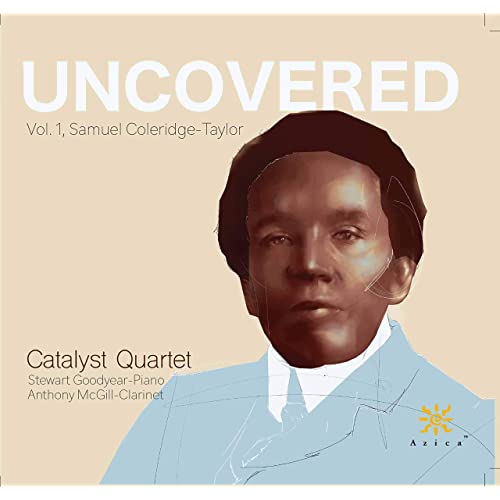
Earlier this month, VAN Magazine published a fascinating interview between Brin Solomon and clarinetist Anthony McGill centered around Samuel Coleridge-Taylor. That composer’s music is the focus of the new album Uncovered, Vol. 1 from the Catalyst Quartet, McGill, and pianist Stewart Goodyear, released on Azica Records.
Solomon and McGill discuss how racism impacts which historical figures we do and don’t learn about. “It’s whitewashing history: We don’t find out about all the heroes and creators that are of African descent,” McGill says.
The clarinetist also shares his own personal feelings about playing Coleridge-Taylor’s Clarinet Quintet. “It sounds like the experience of someone I can identify with, someone who’s a Black man,” McGill says. “Those melodies are singing to you directly, whoever you are. But also, as I was playing them, I felt like they were coming directly from me.”
Among many other topics, Solomon and McGill also consider the question of whether classical music institutions are making meaningful change with regards to diversity and changing the power structures within the field.
Listen to McGill and the Catalyst perform the first movement of Coleridge-Taylor’s Clarinet Quintet on YouTube. Also, stay tuned for a live performance of the piece on April 11 from CityMusic Cleveland.
TODAY ON THE WEB:
Today, Apollo’s Fire will release the concert video of “Tapestry: Jewish Ghettos of Baroque Italy,” an exploration of the vibrant melting pot of Jewish culture in Italy c. 1600. Purchase tickets here — the video will be available on-demand for 30 days.
Other local attractions include “CIM Perspectives: Armenian Music for Peace” at 7 pm (free, but donations benefit humanitarian relief for Armenia and Artsakh) and WCLV’s “Cleveland Ovations: The Best of BlueWater Chamber Orchestra” at 8 pm.
Moving southwest, the Cincinnati College-Conservatory of Music welcomes Transient Canvas in a virtual residency tonight and tomorrow, both at 7:30 pm, including six premieres by CCM students (watch here). And moving east, the Philadelphia Chamber Music Society presents pianist Richard Goode at 6:00. A bit further east, the Philharmonie de Paris presents Ensemble Intercontemporain at 2:30.
Details in our Concert Listings.
TODAY’S ALMANAC:
The two most famous musicians to recognize today are Austrian composer Joseph Haydn (born on this date in 1809) and Polish violinist/composer Henryk Wieniawski (died on March 31, 1880). But let’s instead turn our focus to a pair of lesser-known figures, beginning with an Ohio-connected composer.
Jake Heggie was born on this date in 1961 in West Palm Beach, Florida, but shortly afterward, his family moved to Columbus, Ohio, where he was raised. Heggie’s story clues you into the amount of creative talent that exists in the administrative sector of the arts industry: in the late ‘90s, he went straight from the position of public relations associate for San Francisco Opera to being named that company’s composer-in-residence. His international career began with Dead Man Walking, premiered in 2000. Watch a clip from a 2016 performance by Shreveport Opera here.
And soprano Elizabeth Taylor Greenfield, who died on March 31, 1876, was considered the best-known Black musician of her time in both Europe and America, armed with a beautifully resonant voice and a wide range. Born into slavery in Natchez, Mississippi, she was taken to Philadelphia as a child and freed, though she continued to serve her former mistress until that woman’s death. After that, Greenfield supported herself by performing, gained recognition in the Northeast, and eventually embarked on a tour of the U.S. and Europe that included performing for Queen Victoria at Buckingham Palace.
That description covers the basic facts about her life and accomplishments, but there is so much ugliness that’s also important to understand in the history around Elizabeth Taylor Greenfield. Learn about the different ways in which racism impacted her career in an article by Adam Gustafson in The Conversation, which ends on a positive note about her impact on society:
But Greenfield’s tour did more than prove to white audiences that black performers could sing as well as their European peers. Her tour challenged Americans to begin to recognize the full artistry – and, ultimately, the full humanity – of their fellow citizens.
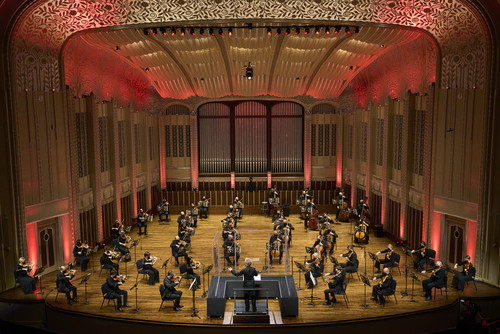 Episode 7 of The Cleveland Orchestra’s pre-recorded In Focus series is the shortest so far, clocking in at only 37 minutes. But the emotional impact of Dmitri Shostakovich’s bleak Chamber Symphony in c followed by the calm, shimmering hopefulness of Olivier Messiaen’s Le Christ, lumière du Paradis (from Éclairs sur l’Au-Delà) is out of all proportion to the length of the music.
 R.I.P. MICHAEL BISHOP:
 Piano Cleveland has announced that after a year-long postponement due to the challenges presented by the pandemic, the organization’s signature event — the Cleveland International Piano Competition (CIPC) — will take place from July 8 through August 11, 2021. (Above: Nikita Mndoyants, 2016 first place winner, with Bramwell Tovey.)
 ONLINE THIS WEEKEND:
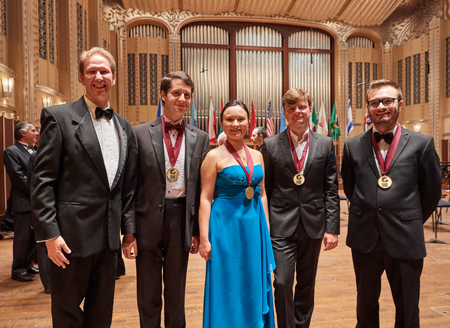 Piano Cleveland announced today that the 2021 iteration of the Cleveland International Piano Competition will begin online from July 8-25 with preliminary rounds recorded at eight venues across the globe, and culminate with in-person Semifinal and Final Rounds in Cleveland from July 29 to August 4. The final two days will feature contestants in chamber music with the Escher Quartet, and concertos with The Cleveland Orchestra. Read the press release
  TODAY ON THE WEB:
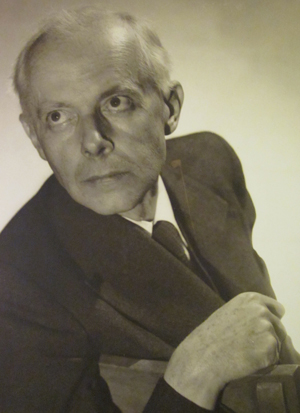 On March 25, 1881 composer, pianist, ethnomusicologist, and teacher Béla Viktor János Bartók was born in Nagyszentmiklós, Hungary, now Sânnicolau Mare, Romania.